
The Tuileries Garden
A garden steeped in history
The Tuileries Garden is one of the oldest and most prestigious green spaces in Paris. Located between the Louvre Museum and the Place de la Concorde, it owes its name to the old tuileries (tile manufacturing workshops) that once occupied the land. It was in 1564 that Queen Catherine de Medici ordered the creation of a garden to accompany her palace. At the end of the XVIIIᵉ century, it was redesigned by the famous landscaper André Le Nôtre, creator of the gardens of Versailles, who made it a model of the French classical style. Opened to the public after the French Revolution, it is now a must-see place for Parisians and visitors from all over the world.
An exceptional setting between the Louvre and Concorde
The Tuileries Garden extends over almost 25 hectares in the 1st arrondissement. Its central position makes it a must for anyone exploring the historic heart of Paris. On the one hand, the majestic Louvre attracts art lovers; on the other, the Place de la Concorde opens the perspective towards the Champs-Élysées and the Arc de Triomphe. This privileged location makes it not only a place to walk but also a transition space between some of the most emblematic sites of the capital.
The French walk
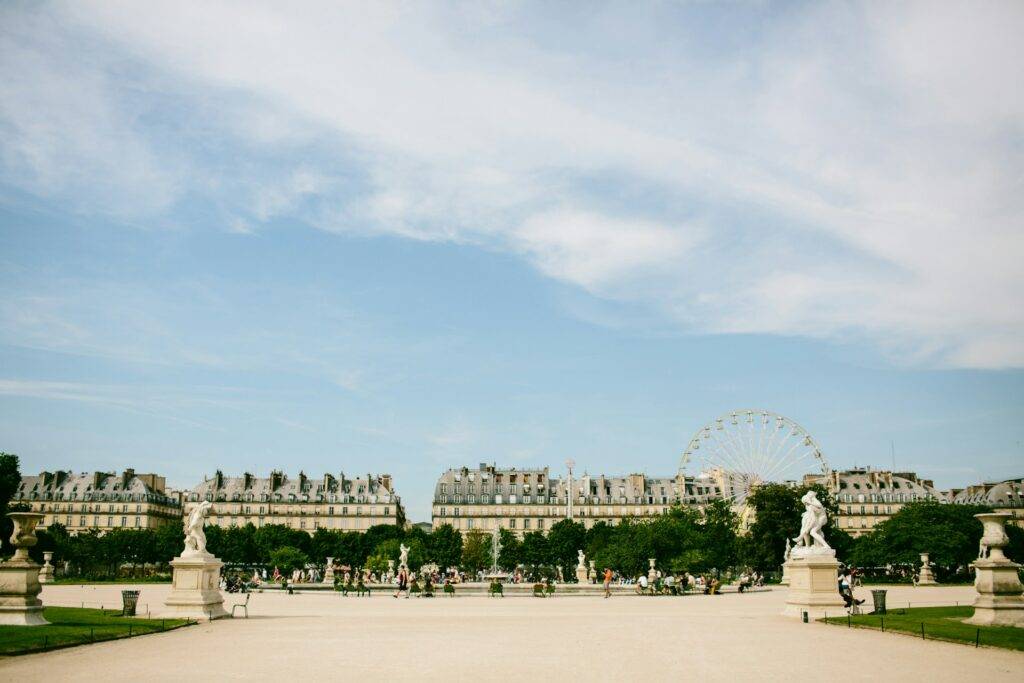
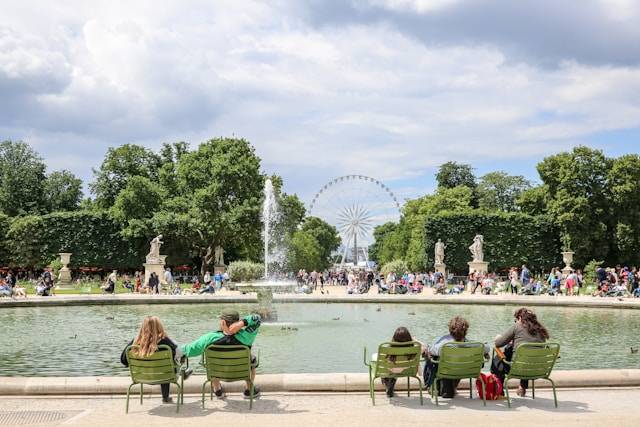
As in many gardens designed by Ours, the paths of the Tuileries Garden are wide and perfectly ordered. The perspectives unfold symmetrically, guiding the gaze towards the obelisk of the Concorde or the pyramid of the Louvre. The garden is also punctuated by round and octagonal pools, where visitors like to sit on the emblematic green chairs. The children sail small sailboats there, perpetuating a Parisian tradition similar to that of the Luxembourg Gardens.
Photo Gallery
An open-air museum
Walking around the Tuileries is also browsing a real open-air art gallery. The garden houses a rich collection of statues and sculptures made by renowned artists such as Maillol, Rodin or Giacometti. 2 museums complete this artistic dimension :
- The Orangery Museum, famous for Monet’s Water Lilies.
- The Jeu de Paume, a place dedicated to photography and contemporary art.
Thus, the garden is much more than just a relaxation area: it is a gateway to Parisian culture.
Daily life and entertainment
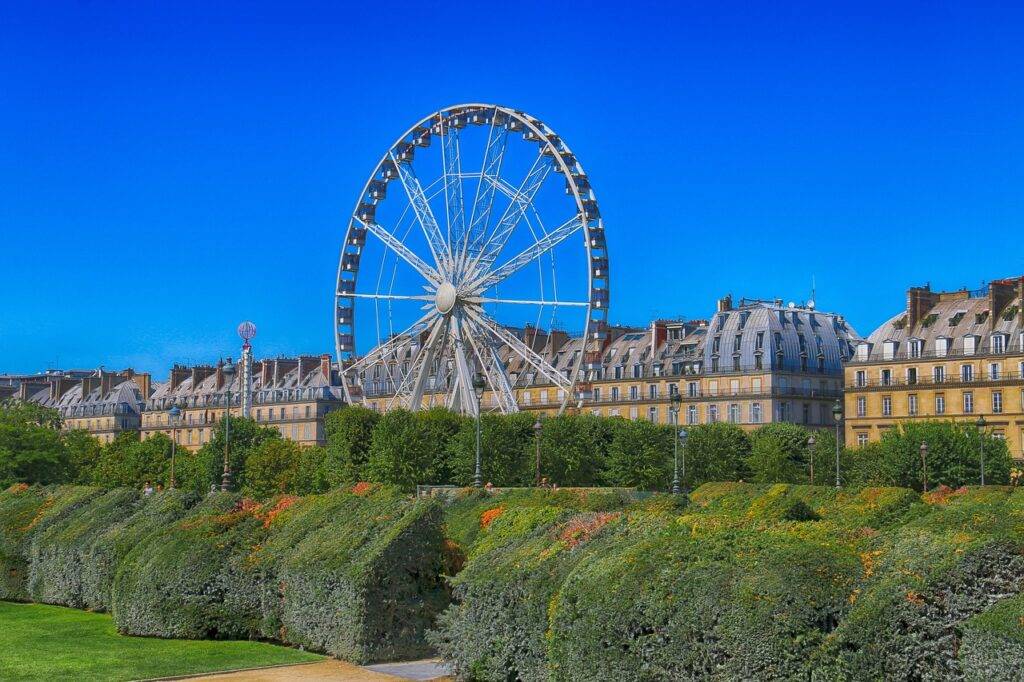
The Tuileries Garden is never frozen. In summer, it hosts the traditional Tuileries Festival, a family funfair with ferris wheel, merry-go-rounds and gourmet stalls. Throughout the year, it attracts strollers, joggers and lovers of improvised picnics. The vast lawns and tree-lined alleys offer an ideal setting to relax after a visit to the Louvre or before heading to the Champs-Elysées.
A cosmopolitan meeting place
Thanks to its central location, the Tuileries Garden is a crossroads where Parisians and travelers from all over the world meet. We meet families who have come to enjoy the play areas, tourists admiring the perspectives, but also students or artists inspired by the atmosphere of the place. This cosmopolitan spirit contributes to making the Tuileries a living and universal space, where everyone finds their place, whatever their origin.
Video
The Tuileries throughout the seasons
Each season, the garden offers a different atmosphere. In the spring, the flower beds illuminate the paths. In summer, the pools reflect the blue sky and the coffee terraces around the garden fill up. Autumn colors the trees with orange and red, offering a romantic setting. In winter, the garden retains its geometric elegance, and its large paths become quieter, almost solemn. This seasonal diversity makes the Tuileries Garden a place to rediscover on each visit.
Visit the Tuileries Garden
Admission is free and free, as in most Parisian public gardens. It can be easily reached by metro, thanks to the Tuileries, Concorde or Palais Royal – Louvre Museum stations. It is advisable to plan a walk that combines the visit of the garden with that of the Louvre, the Orangery or simply a break before exploring the Champs-Élysées.